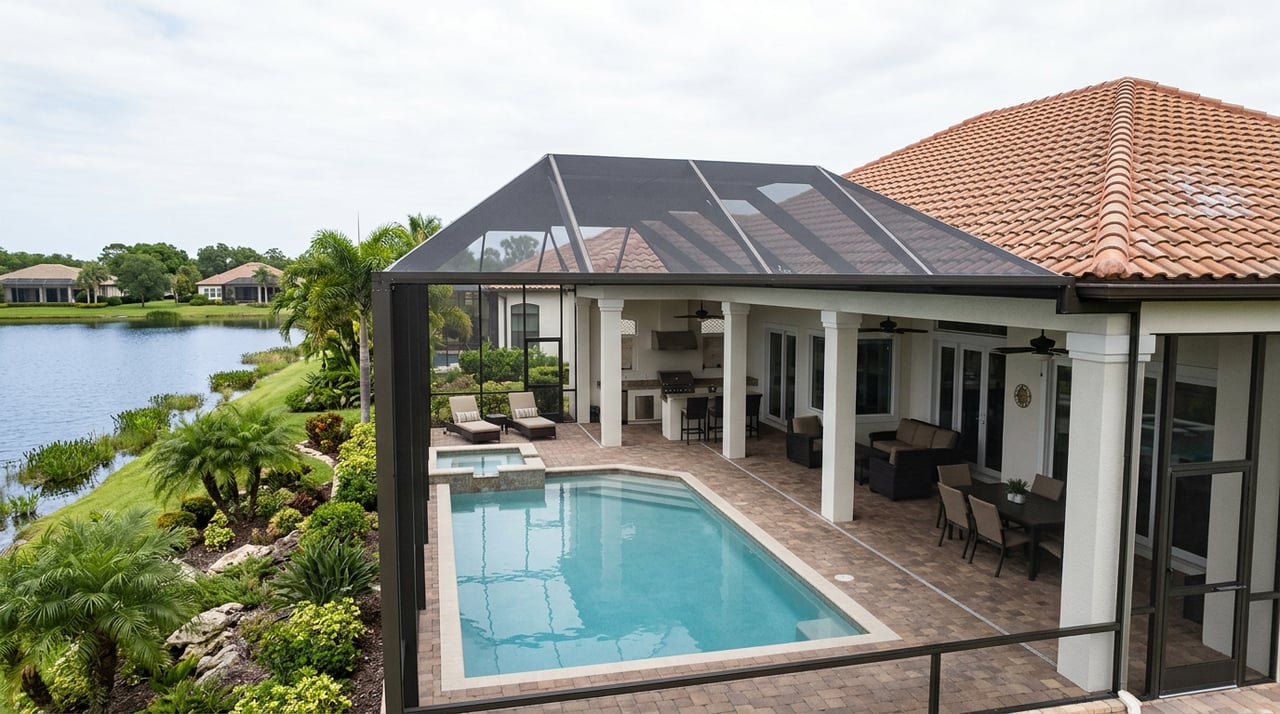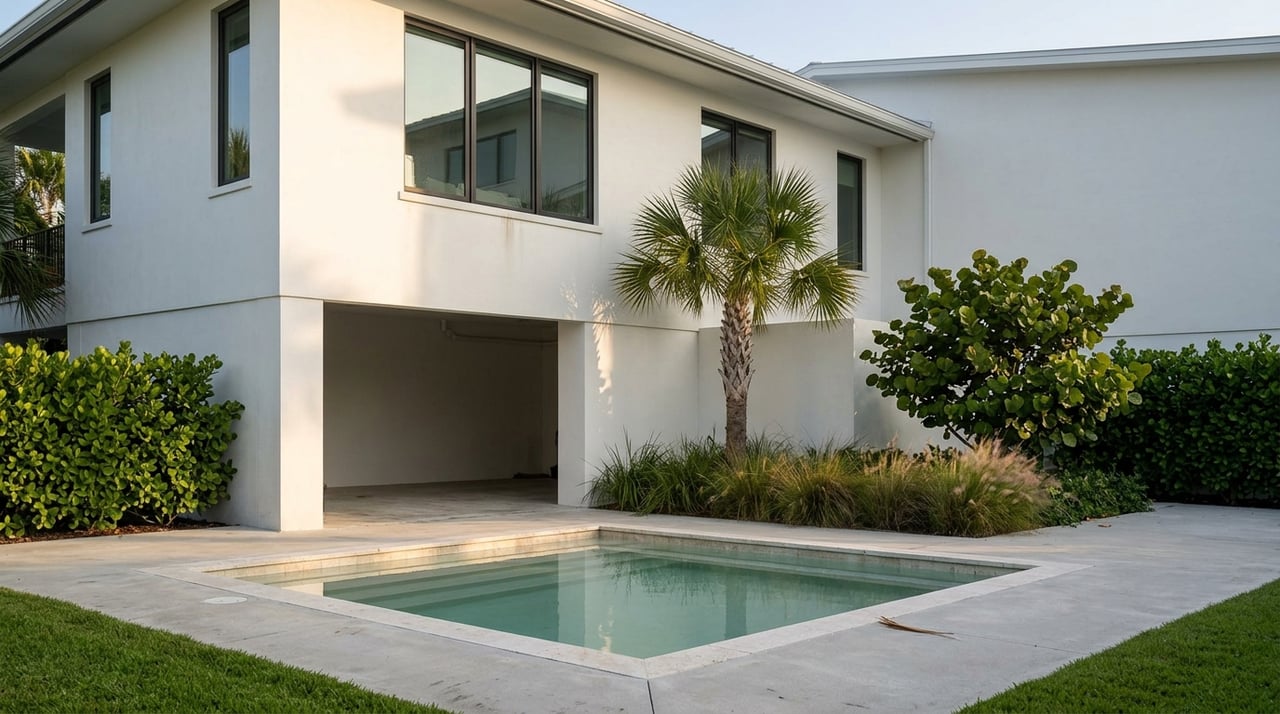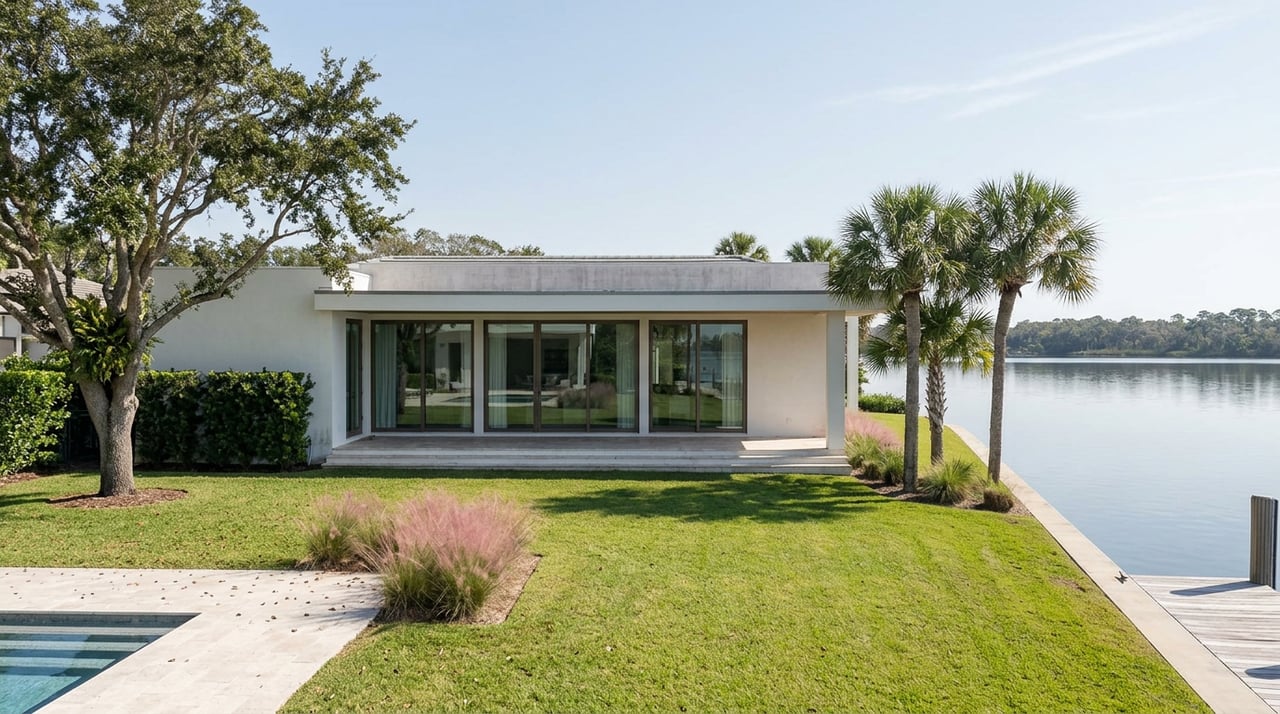
Ask for three recent comparable sales on Jupiter Island and most agents will pause before answering. Not because the data doesn't exist, but because the island rarely sells more than thirty houses in a good year, and no two of them are alike. One sits on the ocean with two hundred feet of frontage. Another backs onto the Intracoastal with a private dock. A handful, the rarest and most expensive, run all the way from the Atlantic to the Intracoastal on a single lot. There is no tract of similar homes to draw from, because there was never a tract to begin with.
That absence of clean comps is not a quirk of a slow market. It is the market. And it explains something that portal medians and glossy listing photos tend to obscure: on Jupiter Island, the house itself is a secondary variable. What actually sets the price is the land underneath it, and the water it touches, in a supply that has not grown in decades and cannot grow now.
A Repricing, Not a Bubble
Between 2016 and 2026, the median sale price per square foot on Jupiter Island rose from $551 to $2,085, a multiple of roughly 3.8 times, based on deduplicated MLS sales and qualified private deeds tracked across that decade. That is not a story about bigger houses or fancier finishes. The physical stock barely changed. What changed was how buyers valued the same fixed inventory once they understood what it actually was.
The shift arrived in a specific window. From 2016 through 2019, the island's median price per foot drifted in a narrow band, moving from $551 up to around $718, the kind of gentle appreciation you would expect in any stable luxury market. Then 2020 brought 69 qualified sales, the busiest year on record and roughly double any nearby year, as buyers reassessed where and how they wanted to live. By 2022, the median price per foot had tripled against the 2019 baseline, pushing past $2,100. Since then, prices have held near that peak rather than giving it back. The 2026 figure of $2,085 sits just below the 2022 high, which tells you the repricing was not a spike that faded. It was a floor that got reset and stayed there.
| Period | Median $/sqft | What was happening |
|---|---|---|
| 2016 | $551 | Slow, steady appreciation |
| 2019 | ~$718 | Still drifting before the shift |
| 2020 | $956 | Record volume, 69 qualified sales |
| 2022 | ~$2,150 | Tripled against the 2019 baseline |
| 2026 | $2,085 | Holding near the 2022 peak |
The mechanism behind that table is simple arithmetic. The Town of Jupiter Island holds about 512 single-family parcels and 80 vacant residential lots on roughly 855 residential acres. Large stretches of the island, including Blowing Rocks Preserve and the surrounding refuge lands, are permanently protected and will never be built on. That is the entire supply, and it has been the entire supply for generations. When 69 buyers competed for a slice of it in a single year, every subsequent buyer was bidding against a smaller remaining pool of an inventory that does not replenish. Houses here tend to hold for decades once bought, which means each sale removes an opportunity that will not reappear on any predictable timeline.
The Sale That Shows the Repricing Stuck
One address makes the case more clearly than any average can. A house traded on the open market for $26 million in May 2021. It sold again, privately, in February 2026, for $40 million. That is a 54 percent gain across the exact years when luxury markets elsewhere in the country cooled. No renovation explains a move that size. The land underneath the house did not get any larger or any closer to the ocean. What changed was the price the market was willing to assign to a fixed and finite piece of Jupiter Island, and that price kept climbing even as comparable luxury markets softened.
Why the House Matters Less Than the Water
Because supply on Jupiter Island cannot expand, the differences between one listing and the next are almost entirely about land and water, not square footage or bedroom count. Three factors do most of the work:
- Waterfront type. Direct oceanfront, direct Intracoastal, and the rare parcel that spans both are priced on different tiers entirely. A lot running ocean to Intracoastal is unusual enough that it is treated as its own category rather than a premium add-on to an ordinary Intracoastal listing.
- Frontage footage and lot depth. Listings on the island commonly describe frontage in specific feet, whether 100 feet of direct ocean or several hundred feet along the Intracoastal, because that number correlates more tightly with price than interior finish level does.
- Privacy buffers and preserve adjacency. A lot bordered by protected conservation land or set deep behind hedges and setbacks carries value that has nothing to do with the house's construction date.
This is why pulling three nearby sales and averaging their price per square foot, a method that works reasonably well in Stuart or Palm City, produces a misleading number here. Two houses of identical size on Jupiter Island can sell a full order of magnitude apart depending on which side of the road they sit on and how many feet of water frontage come with the deed.
Scarcity Does Not Mean No Room to Negotiate
The instinct, once you understand how fixed the supply is, is to assume every listing sells near full ask. The data says otherwise. A 2025 luxury market report on the island found a median list-to-sale ratio of 92.9 percent, and some homes ultimately closed at just 69 to 79 percent of their original asking price after spending 38 to 176 days on the market. Sellers who price ambitiously, in a market with no clean comps to check their assumptions against, can face long runways and steep downward adjustments later. Well-positioned properties still move, but the spread between the confident asking price and the final number is wider here than the scarcity narrative alone would suggest.
For a buyer, that spread is the actual opening. Fixed supply sets a floor under the market as a whole. It does not set the price of any single listing, because each seller is still guessing at value in a market where the usual pricing tools do not apply cleanly.
Life Off the Island, Not On It
One detail surprises buyers who have not spent time on Jupiter Island: no commercial development is permitted on the island itself. There is no strip of restaurants or shops to browse. Day-to-day errands, dining, and shopping happen in neighboring Jupiter, Tequesta, and Hobe Sound, with Harbourside Place serving as the closest waterfront hub for that kind of activity just off the island. Blowing Rocks Preserve, Burt Reynolds Park, and the Loxahatchee River Center sit nearby as well, offering the outdoor access that pairs with the estate lifestyle the island itself is built around. The island's zoning has kept it that way deliberately, which is part of why the land underneath each house carries so much of its value. Privacy here is not incidental. It is engineered by the same land-use decisions that keep the supply fixed.
FAQ
Does a bigger house on Jupiter Island cost proportionally more? Not reliably. Square footage matters less here than waterfront type, frontage footage, and lot depth. Two similarly sized houses can sell far apart in price depending on which side of Beach Road they sit on and how much water frontage comes with the lot.
Why is it hard to get a straight answer on comparable sales? The island sells roughly thirty houses in a typical year, and each one differs meaningfully in water access, lot configuration, and privacy buffer. There is rarely a set of truly comparable recent sales to draw from, which is different from most residential markets.
Is the market cooling now that prices have held steady since 2022? The median price per square foot in 2026, at $2,085, sits close to the 2022 peak of roughly $2,150 rather than declining meaningfully from it. That pattern, along with a repeat sale that gained 54 percent between 2021 and 2026, suggests the repricing has held rather than reversed, even as list-to-sale ratios show real negotiating room on individual listings.
If you are trying to make sense of a Jupiter Island listing against what similar money buys elsewhere on the Treasure Coast, that comparison takes more than a spreadsheet of square footage. Amax Real Estate works through the land, water, and privacy variables that actually set price on the island, alongside the broader coastal and investment markets nearby. Schedule a consultation to walk through what a specific property's frontage, lot, and location are really worth before you make an offer.