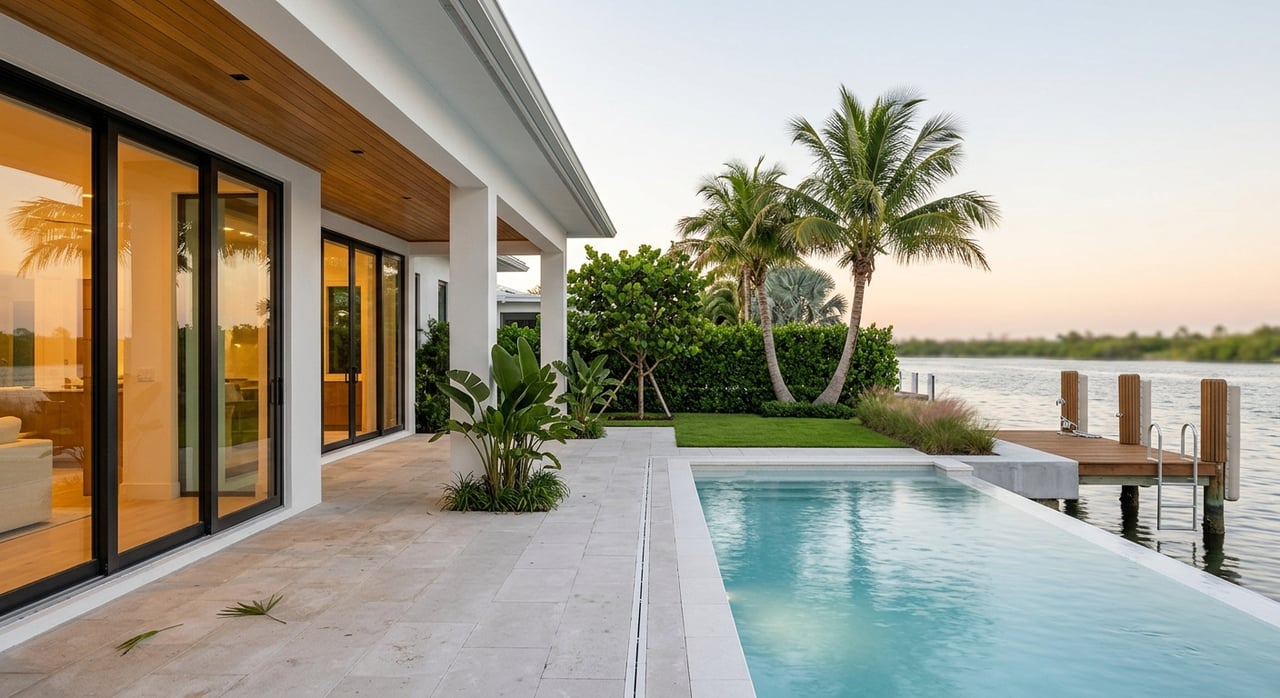
Wondering if waterfront living in Hobe Sound feels more like a lively beach town or a quiet coastal retreat? For many buyers, that is the key question. If you are drawn to boating, preserved shoreline, and a more private everyday rhythm, Hobe Sound offers a distinct kind of Florida water lifestyle. Here is what living on the water in Hobe Sound actually looks like, and what you should keep in mind as you explore your options.
Hobe Sound feels coastal and low-key
Hobe Sound stands apart because it combines water access with a small-town setting. Martin County’s planning goals for the area focus on preserving that character, improving walkability around Bridge Road, and supporting livable neighborhoods, parks, and open space.
That local framework helps explain why Hobe Sound often feels polished without feeling crowded. Instead of a dense resort strip, you are more likely to find a preserve-rich coastal setting, marina-oriented living, and residential areas shaped by privacy, open land, and access to the water.
Waterfront life centers on access
If you live on the water in Hobe Sound, daily life often revolves around how you use the water. Some homeowners want direct boating access. Others care more about paddle access, beach time, water views, or the option to keep a boat close by.
The wider water system is a major part of that appeal. Martin County notes that the St. Lucie Inlet connects the Atlantic Ocean to the Indian River Lagoon, the St. Lucie River, and Hobe Sound and Atlantic Intracoastal Waterway waters to the south. That creates a connected environment for boating and on-water recreation, while also making inlet conditions an important practical detail.
Boating is part of the lifestyle
For boaters, Hobe Sound offers a strong connection to the Intracoastal and nearby inlet systems. The area supports everything from day cruising to fishing to paddling, with launch points and marina access woven into the broader coastal environment.
Martin County’s Blueway materials identify Jimmy Graham Park in Hobe Sound as a designated launch site. The broader aquatic preserve system in the region supports boating, fishing, kayaking, and paddleboarding across 23,000 acres, which gives you a sense of how much protected water surrounds the area.
Marina living is available
Some buyers are looking for more than a view. They want a home that connects directly to a marina lifestyle. In Hobe Sound, that can mean communities and residences that are tied to slips, canals, or direct Intracoastal orientation.
One local example is Loblolly Marina, listed by the Hobe Sound Chamber at 8000 SE Little Harbour Drive. Loblolly’s own materials describe a private, 79-slip deep-water marina on the Intracoastal Waterway, with residences that may face the marina or the Intracoastal. That kind of setup reflects a broader Hobe Sound pattern where waterfront living can be closely tied to boating infrastructure without feeling commercial or high-traffic.
Nature shapes the waterfront experience
One of the biggest differences in Hobe Sound is that the shoreline experience is strongly influenced by preserves, protected habitats, and managed coastal land. That gives the area a quieter feel and shapes how people use the water day to day.
If you picture a waterfront lifestyle filled with boardwalks, natural shoreline, and less congestion, Hobe Sound fits that image well. The area’s outdoor anchors are not just amenities. They are part of what defines the market.
Beaches are accessible but not overbuilt
Hobe Sound Beach offers public shoreline access at 1 SE Beach Road. Martin County notes guarded hours, beach-condition updates, and a beach wheelchair program, which signals that the beach is both accessible and actively maintained.
That matters if you want convenience without an overly urban beachfront setting. In Hobe Sound, the beach experience tends to feel more natural and managed than heavily built-out.
Preserves create a quieter rhythm
The Nathaniel P. Reed Hobe Sound National Wildlife Refuge includes nearly 10 miles of mangrove communities along the Indian River Lagoon and 3.5 miles of Atlantic Ocean beach. It also contains the largest contiguous section of undeveloped beach in southeastern Florida.
That kind of preservation has a direct lifestyle impact. It helps explain why waterfront living here often feels calm, scenic, and conservation-oriented rather than busy or entertainment-driven.
Blowing Rocks Preserve adds another public coastal feature in Hobe Sound. It offers swimming, snorkeling, beach access, and habitat restoration trails on Jupiter Island, reinforcing the area’s strong connection to native coastal landscapes.
State parks expand your options
Jonathan Dickinson State Park is another major reason Hobe Sound appeals to water-focused buyers. Florida State Parks identifies it as the largest state park in Southeast Florida, with the Loxahatchee River, boating, canoeing, kayaking, a boat ramp, a canoe and kayak launch, and interpretive boat tours.
This gives you more than scenic value. It adds practical variety to daily life, especially if you want access to paddling, trails, and natural water settings beyond your own neighborhood.
Local preserves also support a more everyday connection to nature. Hobe Sound Scrub Preserve and Kitching Creek Preserve add smaller-scale outdoor access, and Kitching Creek includes a canoe and kayak launch, paddling trail, and wildlife viewing.
Waterfront homes come in different forms
Waterfront living in Hobe Sound is not one-size-fits-all. The area includes a mix of marina-linked communities, Intracoastal-oriented neighborhoods, and canal-front homes, though public government sources do not catalog the housing stock by frontage type.
Available neighborhood and HOA examples show a range of possibilities. Osprey Cove describes itself as an Intracoastal community. Illustrative neighborhood sources also describe canal homes, direct Intracoastal frontage, and deeded-slip setups in parts of the local market.
For you as a buyer, the key is understanding what kind of water access fits your goals:
- Intracoastal frontage for direct open-water orientation
- Canal-front homes for protected dockage and route access to larger waterways
- Marina-connected residences for convenience and a more service-oriented boating setup
- Water-view homes for scenery and proximity without direct dock needs
The right choice depends on how often you plan to be on the water, what type of vessel you use, and whether you prioritize privacy, convenience, or a broader club-style environment.
Club living often overlaps with waterfront appeal
Hobe Sound also has a notable private-club presence. That does not mean every waterfront buyer wants a club community, but it does shape the local market and adds another layer to the lifestyle.
Local examples include Medalist Golf Club, The Club at Lost Lake, and Hobe Sound Golf Club, which describes a 240-acre gated community with about 50 acres devoted to housing and 24-hour guard service. Together, these examples show how Hobe Sound can appeal to buyers who want water access, privacy, and club amenities in the same general area.
This overlap is part of why Hobe Sound reads as refined but restrained. It is not built around a public entertainment strip. It is built around neighborhoods, preserves, marinas, and private lifestyle choices.
Waterfront ownership comes with practical realities
Living on the water in Hobe Sound can be rewarding, but it also comes with responsibilities and conditions that matter during your home search. In this market, due diligence is just as important as the view.
Martin County notes that shoaling is a recurring issue at the St. Lucie Inlet, and dredging is needed to keep the channel navigable. If boating access is a priority, inlet conditions are not background information. They are part of everyday planning.
The county’s coastal management work also includes beach nourishment, mooring fields, king tides, inlet management, and waterway maintenance along 22 miles of Atlantic coastline. For buyers, that means waterfront living here includes both lifestyle benefits and ongoing coastal stewardship realities.
A thoughtful home search should consider:
- Your preferred type of water access
- Marina, dock, or launch needs
- Preserve rules or access limits at nearby shoreline sites
- Seasonal water conditions and inlet navigation considerations
- How much privacy, maintenance, and activity you want around you
Is Hobe Sound right for your waterfront lifestyle?
If you want a highly active resort environment, Hobe Sound may feel too quiet. But if you want a coastal setting where boating, beaches, nature, and privacy can coexist, it offers a compelling balance.
The strongest way to describe Hobe Sound is as a preserve-rich coastal enclave where waterfront living is shaped by access, discretion, and outdoor quality of life. You can boat, paddle, spend time at the beach, and enjoy marina or club environments, all without giving up the area’s small-town feel.
For many buyers, that combination is exactly the point. If you are weighing waterfront options in Hobe Sound, a strategic search can help you separate scenic appeal from practical fit and identify the type of property that best supports how you want to live.
If you are considering a waterfront purchase or sale in Hobe Sound, Mike Atkins can help you evaluate lifestyle fit, access considerations, and long-term value with a discreet, advisory approach.
FAQs
What is waterfront living like in Hobe Sound, Florida?
- Waterfront living in Hobe Sound is generally quiet, nature-oriented, and shaped by boating access, protected shoreline, beaches, and a small-town coastal setting.
Is Hobe Sound better for boaters or beach lovers?
- Hobe Sound supports both, with access to the Intracoastal and inlet system, designated launch areas, a guarded public beach, preserve shoreline, and water-based recreation across the surrounding region.
Are there marina communities in Hobe Sound?
- Yes. Local examples include marina-linked living such as Loblolly, where residences may be oriented to the marina or the Intracoastal.
What types of waterfront homes are found in Hobe Sound?
- Illustrative local examples show a mix of Intracoastal communities, canal-front homes, marina-connected residences, and homes with direct or nearby water access.
What should buyers know about boating in Hobe Sound?
- Buyers should understand that inlet conditions matter. Martin County notes recurring shoaling at the St. Lucie Inlet, and navigability depends in part on ongoing dredging and waterway maintenance.
Does Hobe Sound have public beach access?
- Yes. Martin County lists Hobe Sound Beach at 1 SE Beach Road, with guarded hours, beach-condition updates, and a beach wheelchair program.
Why does Hobe Sound feel quieter than some Florida beach towns?
- County planning emphasizes small-town character, walkability, open space, and livable neighborhoods, while the surrounding preserves and managed shoreline contribute to a more restrained coastal atmosphere.
Are there nature preserves near Hobe Sound waterfront areas?
- Yes. Key outdoor areas include the Nathaniel P. Reed Hobe Sound National Wildlife Refuge, Blowing Rocks Preserve, Jonathan Dickinson State Park, Hobe Sound Scrub Preserve, and Kitching Creek Preserve.